
An introductory course on C




Cloud Computing : Nutzenpotenziale für Unternehmen
Cloud Computing and Virtualization : Issues of Computational Resource Allocation and Load Balancing in Cloud Computing using Virtualization


Computergestützte Filmanalyse

Digitale Analyse aus Hyperspektralbefliegungen des Raums Göttingen zur Geobasisdatengenerierung für die Stadt Göttingen
Dschungelführer : der Führer durch den deutschen Telekommunikationsmarkt
Erstellung eines Moduls zur Sensor-Kalibrierung für optische Satellitendaten


Hypermedia systems

Modern analytic and computational methods in science and mathematics


Performanceevaluation eines Schlüsselaustauschverfahrens : - Inter-Domain-Key-Exchange (IDKE) -


Python lernen mit KI-Tools : Einstieg in die Programmierung mit KI-Unterstützung
Readings in automatic language processing
Scheduling and Isolation in Virtualization : A study on scheduling and isolation for data centers and cloud computing
Security Protocols for Mobile Ad Hoc Networks

Software evolution
The Code Development - A Mature Way : Test Driven Development and Build Automation


Verteilte Systeme - Verteilte Unternehmen : Analogien und Unterschiede

GTM Graduate texts in mathematics : GTM
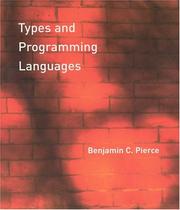
Types and programming languages
description
A comprehensive introduction to type systems and programming languages. A type system is a syntactic method for automatically checking the absence of certain erroneous behaviors by classifying program phrases according to the kinds of values they compute. The study of type systems—and of programming languages from a type-theoretic perspective—has important applications in software engineering, language design, high-performance compilers, and security. This text provides a comprehensive introduction both to type systems in computer science and to the basic theory of programming languages. The approach is pragmatic and operational; each new concept is motivated by programming examples and the more theoretical sections are driven by the needs of implementations. Each chapter is accompanied by numerous exercises and solutions, as well as a running implementation, available via the Web. Dependencies between chapters are explicitly identified, allowing readers to choose a variety of paths through the material. The core topics include the untyped lambda-calculus, simple type systems, type reconstruction, universal and existential polymorphism, subtyping, bounded quantification, recursive types, kinds, and type operators. Extended case studies develop a variety of approaches to modeling the features of object-oriented languages.
read more
pages
656
Year published
nan
Publisher
The MIT Press
Issn
0-262-16209-1
Language
en
categories
id
D.3.1. PIE02